Pterosaurs were extraordinarily weird creatures. They first appeared in the late Triassic period, about 215 million years ago. Pterosaurs are the first and largest vertebrate animals to ever fly. They varied vastly in terms of size; for example there was the Nemicolopterus with a wingspan of about 25 centimetres, and the Hatzegopteryx with a wingspan up 12 metres. [1][2]
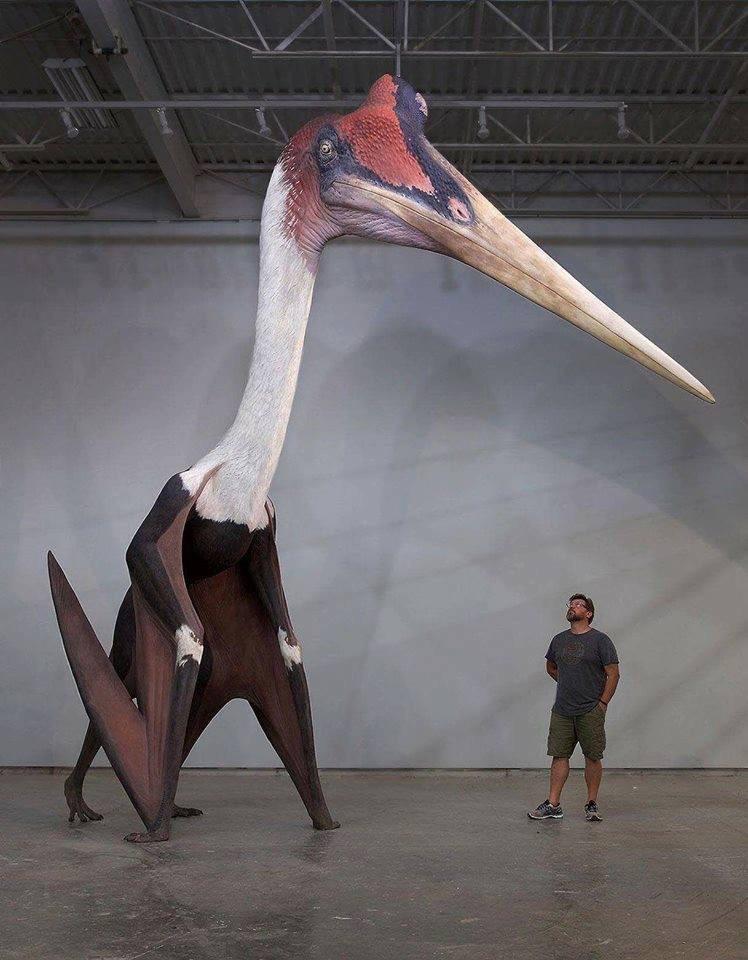
In contrast to what many believe, pterosaurs were not flying dinosaurs. Though they were closely related to dinosaurs, as well as birds. The specifics of their classification is very unclear.
While on the ground, pterosaurs moved on all four feet, with their wings folded up. Earlier pterosaurs had a membranes between their hind legs and tail, making them better at climbing than at walking. In later pterosaurs, these membranes are greatly reduced, allowing them to move well on land and water. [3]
As a disclaimer before reading further, the details of pterosaurs and their flight are scientists, physicists, and paleontologists best guesses. It is important to remember that just because an animal was capable of something, does not mean they actually did it. [6]
This page was created in June 2025 as a project for my physics class. If any information becomes outdated, I will likely not update this page further!